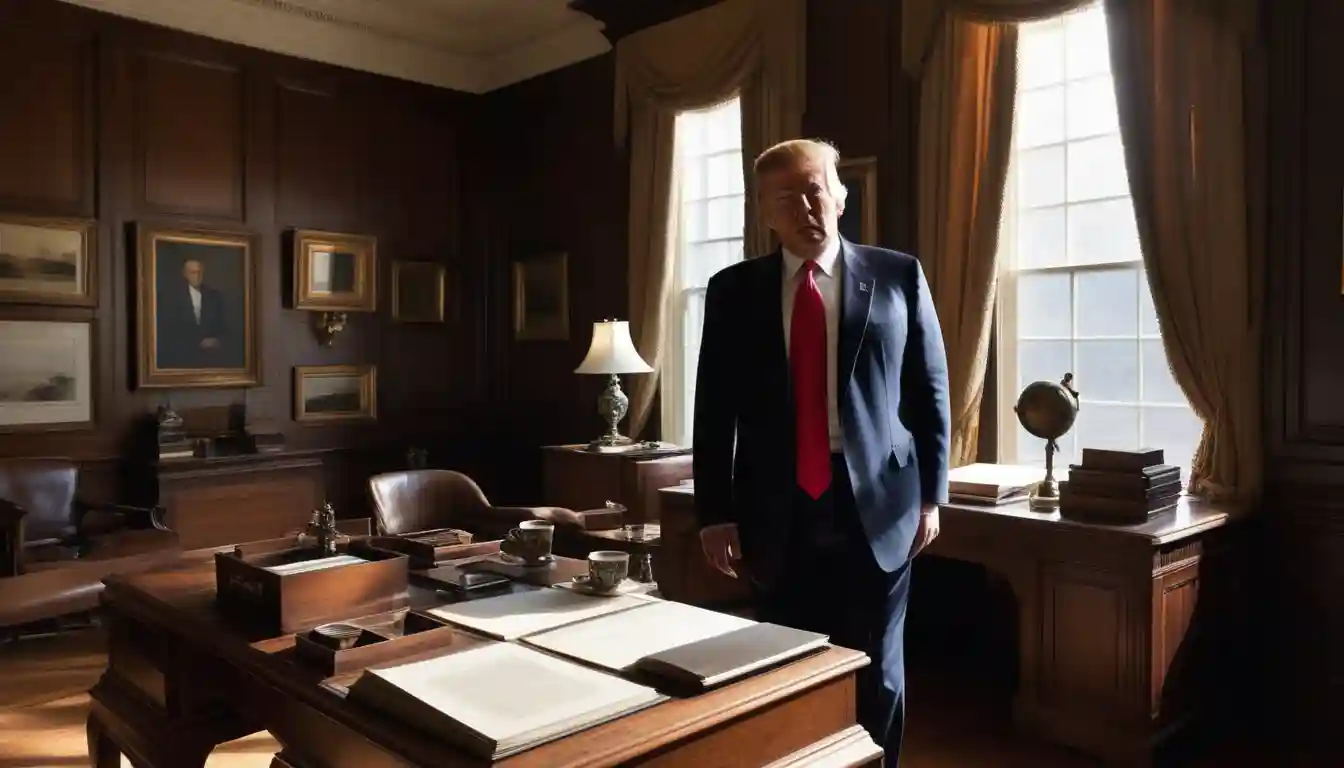
The Fed’s Third Era: What Warsh’s Debut Really Signals for Capital Markets
Today’s Federal Open Market Committee meeting—the first under newly minted Chair Kevin Warsh—is dominating trading desks from New York to London. Markets broadly expect the target rate to hold steady at 3.50%–3.75%. But hyper-focusing on the rate decision misses the tectonic shift underway in Washington.
Sworn in late last month to succeed Jerome Powell, Warsh has wasted no time signaling a profound institutional pivot. He immediately tapped two outsider advisers for the transition: Daniel Heil of Stanford’s Hoover Institution and Paul Winfree, author of the Project 2025 chapter advocating aggressive Fed reforms. While breathless rumors of a 3,000-person "Deep State" staff purge remain entirely unverified political theater, the advisory appointments are real. They are the opening salvo in what promises to be the Fed's third major regime since Paul Volcker broke 1970s inflation. The Bernanke-Yellen-Powell era of extreme transparency and hyper-managed communication is ending. In its place, Warsh is attempting to usher in an era of strategic opacity—a shift that will fundamentally reprice how risk is valued.
The Trimmed-Mean Trap and the Inflation Narrative
To understand the incoming regime, one must look at how Warsh views the data itself. The new Chair has publicly disparaged standard core PCE inflation as a "rough swag." Instead, he favors the Dallas Fed’s trimmed-mean PCE, a metric that systematically strips out extreme price movements. Right now, that gauge reads a benign 2.3%, comfortably below the headline and core numbers that remain stubbornly above 3%.
In a vacuum, this makes technical sense. When inflation is driven by episodic, isolated shocks—like a sudden geopolitical spike in oil prices or tariff distortions—trimmed measures prevent the central bank from overreacting. But deploying it now carries immense structural risk. After the Powell Fed severely damaged its credibility by dismissing 2021’s inflation as "transitory," shifting to a metric that prints lower looks dangerously like scoreboard shopping. If prices are rising simultaneously across food, shelter, insurance, and wages, a trimmed gauge acts as a sedative, lulling policymakers into complacency while the underlying inflation process broadens.
The Cost of Silence in a Market Hooked on Guidance
Warsh’s most disruptive ambition, however, is not statistical; it is behavioral. He has long argued that the Fed simply talks too much. Since 2012, the Fed’s "dot plot" and forward guidance have served as a universal coordination device for modern asset pricing. From long-duration Treasuries to private credit marks, investors have treated the Fed's projections as free insurance, using them to anchor expectations and suppress volatility.
Warsh aims to sever that dependency. By dialing back speeches, downgrading the dot plot, and offering fewer explicit commitments, he hopes to force markets back into independent price discovery. Institutionalists warn this is a dangerous gamble. While it is true that the Powell-era transparency regime bred moral hazard and boxed policymakers into defending obsolete narratives, silence is not a panacea. If Warsh reduces the signal, markets will not respond with quiet efficiency. They will demand a massive uncertainty premium to compensate for the loss of their informational subsidy.
The Discretion Paradox and the New Investment Playbook
This brings us to the profound contradiction at the heart of the Warsh project. He is attempting to restore the Fed's discretionary power at the exact moment when institutional discretion is least trusted. The market does not view his ideological advisory hires, his preference for alternative inflation metrics, and his withdrawal of forward guidance as a return to elegant minimalism. They see a politically contested central bank opting for opacity. A less transparent Fed may be more independent from market pressure, but it will be inherently less trusted by the capital it governs.
For investors, the next three years will be a grueling credibility test. The assumption of an automatic "Fed put" to cushion asset drawdowns is dead. The Warsh regime will likely steepen yield curves, increase term premiums, and inject sustained volatility into a system that has grown complacent.
This is neither a dovish nor a hawkish pivot—it is a structurally less-insured reality. The winning playbook is no longer predicting the next rate cut. It is owning optionality, demanding wider spread compensation, favoring durable cash flows over multiple expansion, and recognizing that central bank opacity is now a permanent, priced-in risk.
not investment advice